“She is able to move within place as place. Within the availability of place. Given that her issue is how to trace the limits of place herself so as to be able to situate herself therein and welcome the other there.”[1
The practice of chōrography
• Tracing the Trace – a critical practice
Chorography is defined as ‘the tracing or describing of particular regions with consideration of aesthetic criteria.’
It is this that is my starting point and begins to focus my course of action and conduct. It is a way of proceeding along a path – sometimes following and at other times leading
Tracing allows me to walk the beaten path through a wild or unenclosed region, made by the passage of water and earth; the track or trail made clear by a line that gives sense to the landscape. Rather than walking country I am drawing country in order to understand better the country.
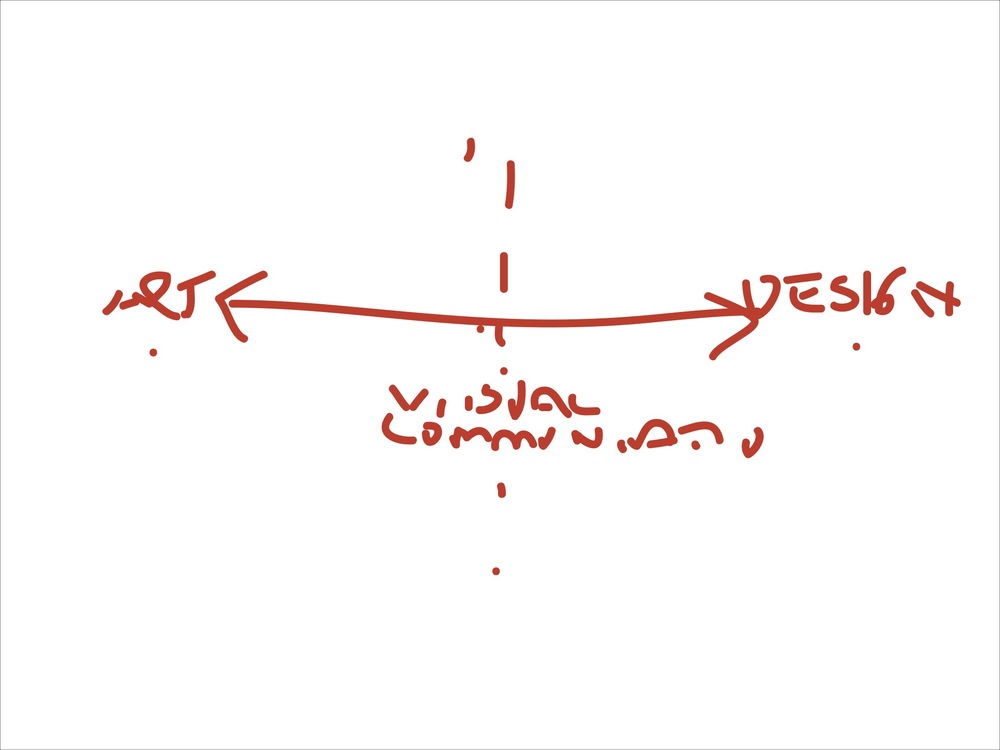
The method offers a way of working that allows the knowledge and observation of place – the maps, information and knowledge to reside and inhere in my drawing practice. It is a surrogate walking and becomes a dance as I move from the role of designer to artist and back again in an infinite loop.
Chorography respects the act of tracing because the act of tracing respects the ground that the act emerges from. It is not a mechanical act. The metaphor of the machine is unacceptable and inappropriate as the humaneness and humanness of the aisthetic experience acts as the motivator for the engagement. Openness respect and responsiveness to the other as a designer. as the designer engages in relations, communities and participants stakeholders to understand the needs and requirements of the translation. it is not a machine. Tracing is the drawing, delineating, marking out; the engaging with the ‘complex artefact’ (Scazzozi 2011 pg 9) by means of a transparent sheet placed over it. This act is multi intentioned – to capture, to reproduce, to copy, to change, to understand and create a opening of understanding in the case of the designer for the participants and in the case of the creative practitioner an aesthetic experience in the performative act of making.
Deleuze and Guattari and Deleuze in Logic of Sensation describe the aesthetic ordering as through layer – ’drawing, strata, the earth
A ‘stubborn geometry’ the measure of the world – all acts of perception refer to the making sense of the experience. It It itself creates its own striation which we will examine in ‘Drawing County chapter.
Tracing in graphic design pre–digital was a process that allowed for multiple examining of composition, structure and also re-use, re-adjustment and reconfiguration, supported scaling comparison and evaluating Tracing recognizes the complexity of image through layering, shifting, removing, adding. The tracings of chora|graphia are not mechanical copies rather it is connection between layers of understanding and reconfiguring through an aesthetic sensibility the stages of change. It is a critical act of mediation that may provide a ‘line of flight’ (Deleuze and Guatarri 1987 pg 15) towards an opening or transformation.
• Critical tracing strategies
Deleuze and Guattari offer sobering reservations about tracing but do recognize that in tracing there is a possibility ‘an intensive trait starts working for itself, a hallucinatory perception, synesthesia, perverse mutation, or play of images shakes loose, challenging the hegemony of the signifier…gestural, mimetic, ludic and other semiotic systems regain their freedom and extricate themselves from the ‘tracing’ (through the act of tracing).’
Tracing as mimesis, repetition, transparency, overlay, erasure, rupture and transformation in the context of an intensive trait have been identified as critical tracing strategies in relation to the experiences on country that provide translations that provide a line of flight for the user and the maker.
‘the relationship with the other is time: it is an untotalizable diachrony in which one moment pursues another, without ever being able to retrieve it, to catch up with it, or coincide with it. The non-simultaneous and non-present are my primary rapport with the other in time. This means that the other is forever beyond me, irreducible to the synchrony of the same. The temporality of the inter-human opens up the meaning of otherness and the otherness of meaning.’[2]



 placetracing | Jacqueline Gothe